

For importers, retailers and private-label brands sourcing wooden toys from China, EN71 compliance is the non-negotiable entry ticket to the EU market. This guide breaks down every EN71 part that applies to wooden toys, what to verify on a China factory audit, and how to avoid customs holds, recalls and penalties.
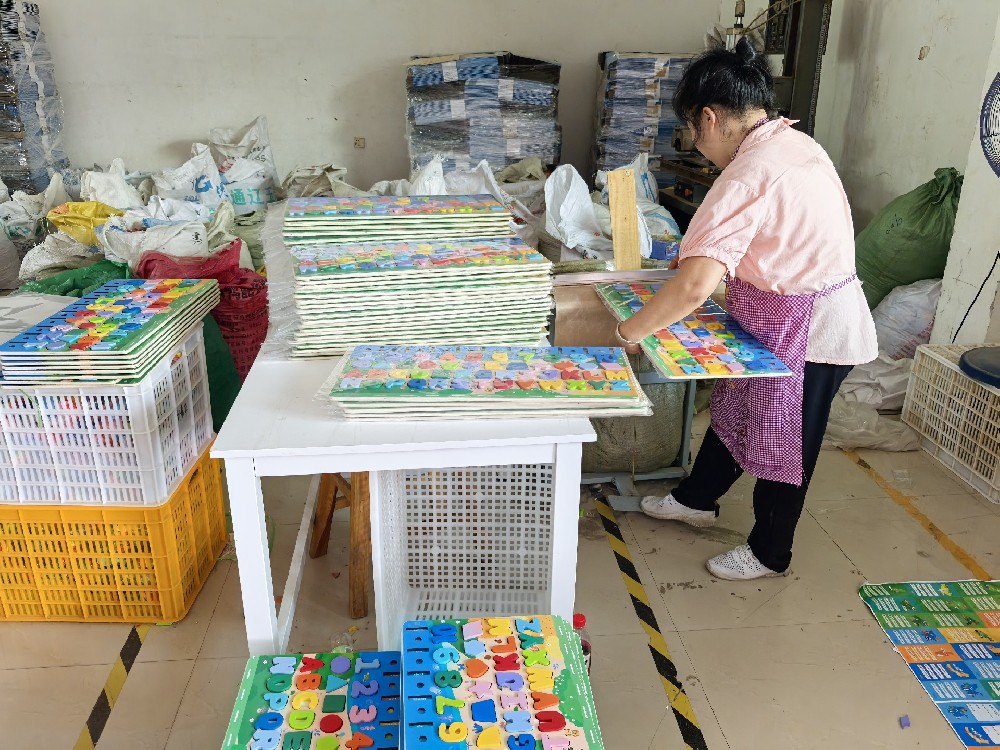
What Is EN71 and Why It Matters for Wooden Toys
EN71 is the harmonized European toy safety standard series under EU Toy Safety Directive 2009/48/EC. Any product designed or intended for children under 14 years old — including wooden puzzles, building blocks, Montessori toys and pretend-play sets — must meet relevant EN71 parts and carry CE marking before being placed on the EU/EEA market.
When sourcing from a China wooden toy manufacturer, buyers often make the mistake of accepting a generic "factory certificate" instead of a product-specific EN71 test report. The distinction matters: a certificate covering one SKU does not validate a different material, paint colour or design.
Core EN71 Parts Applying to Wooden Toys
EN71-1: Mechanical and Physical Properties
This is the most critical section for solid wooden toys, covering structural safety to prevent choking, cutting, pinching and stab hazards.
Key requirements:
Smooth rounded corners, no sharp edges or points; surfaces must not splinter under normal play and abuse tests
Small parts test: components cannot detach under tension/torque tests — especially critical for toys intended for children under 36 months
Gap, pinch-point, cord and protruding-part inspection
Stability and load tests for large activity toys, climbing frames and ride-on wooden toys
Buyer tip: The latest EN71-1 updates add stricter rules for food-imitating toys. If you are developing wooden pretend-play food sets, confirm your factory has tested against the current revision.
EN71-2: Flammability
Tests the flame-spread rate of wood, paint, glue and attached fabric accessories. Natural solid wood typically passes, but composite wood, coatings or textile decorations require verification. Toys must not ignite and spread flame quickly under defined test conditions.
EN71-3: Migration of Certain Elements (Heavy Metal Test)
This is the most commonly failed test for painted wooden toys. EN71-3 tests the migration — not just total content — of 19 restricted heavy metals (lead, cadmium, mercury, chromium, barium and more) when children suck or chew toy surfaces.
Key points:
Water-based non-toxic paint and eco glue are mandatory
Even natural solid wood can fail if surface stain or varnish contains non-compliant heavy metals
Every new colour formula or material batch requires sample testing by an ISO 17025 accredited lab (SGS, Intertek, TÜV, etc.)
EN71-9 / EN71-10 / EN71-11: Organic Compounds
Apply to wooden toys with paint, coating, adhesive and printing ink. These parts restrict harmful volatile organic compounds (VOCs), formaldehyde and organic solvent residues — especially relevant for baby wooden teething toys and other mouthable products.
Additional Mandatory Requirements for EN71 Wooden Toy Export
Beyond the standard tests, every EN71 wooden toy shipment to the EU must include:
CE marking — permanent and legible on product or packaging
Age warning labels — "Not suitable for children under 36 months – small parts" when applicable
Manufacturer information, EU authorised representative details, batch/model number on packaging
Declaration of Conformity (DoC) — issued by the manufacturer, referencing full EN71 standards tested
Magnetic component testing (EN 62115) if the toy contains magnets
What to Verify on a China Wooden Toy Factory Audit
A qualified China EN71 wooden toy factory builds compliance into every production stage — not just finished-goods testing. Here is your audit checklist:
表格
| Audit Point | What to Check |
|---|---|
| Raw material control | Birch, beech, rubberwood or FSC-certified timber; paint/glue suppliers with existing EN71 records |
| In-house pre-testing | Edge check, small-part pull & torque test before lab submission |
| Product-specific reports | Test reports matching exact SKU, colour and material — not generic factory certificates |
| Batch tracking | Full production QC records; re-test when design, paint or wood material changes |
| OEM/ODM capability | EN71 rules applied from prototype stage to avoid costly redesign |
[配图 4:工厂 QC 流程图表或质检线实拍]
FAQ
Are all wooden toys required to pass EN71 for EU import?
Yes. If the product is defined as a toy for children under 14 years old, EN71 compliance and CE marking are legally required for sale in the EU/EEA.
Does passing ASTM F963 mean wooden toys automatically meet EN71?
No. ASTM F963 and EN71 use different testing protocols — especially for heavy metal migration limits. A wooden toy may pass the US ASTM test but fail EN71-3.
Can I source EN71 wooden toys from China with low MOQ?
Yes. Many professional China wooden toy factories support small MOQ wholesale and custom OEM wooden toys with EN71 certification, across categories including wooden puzzles, building blocks, Montessori toys and pretend-play sets.
What documents should a China wooden toy supplier provide?
EN71 lab test report, CE marking, Declaration of Conformity (DoC), product batch records, and FSC wood certificate if requested.
Why Source EN71 Wooden Toys From Our China Factory
We are a direct China wooden toy manufacturer specialising in OEM & ODM wooden toys with a full EN71 compliance system.
All wooden toys manufactured to meet EN71-1, EN71-2, EN71-3 and related organic compound requirements
Pre-production material audit + in-line safety QC + third-party lab testing support
Custom wooden toy design, CNC cutting, laser engraving, non-toxic water-based paint finishing
Flexible MOQ, fast sampling, full export documentation for EU, UK and global buyers
Product range: Montessori wooden toys, wooden puzzles, building blocks, pretend-play toys, baby teething toys, educational wooden games — all EN71 certified
Contact us to request EN71 wooden toy samples, test report copies and a factory quotation for your wholesale or private-label project.